
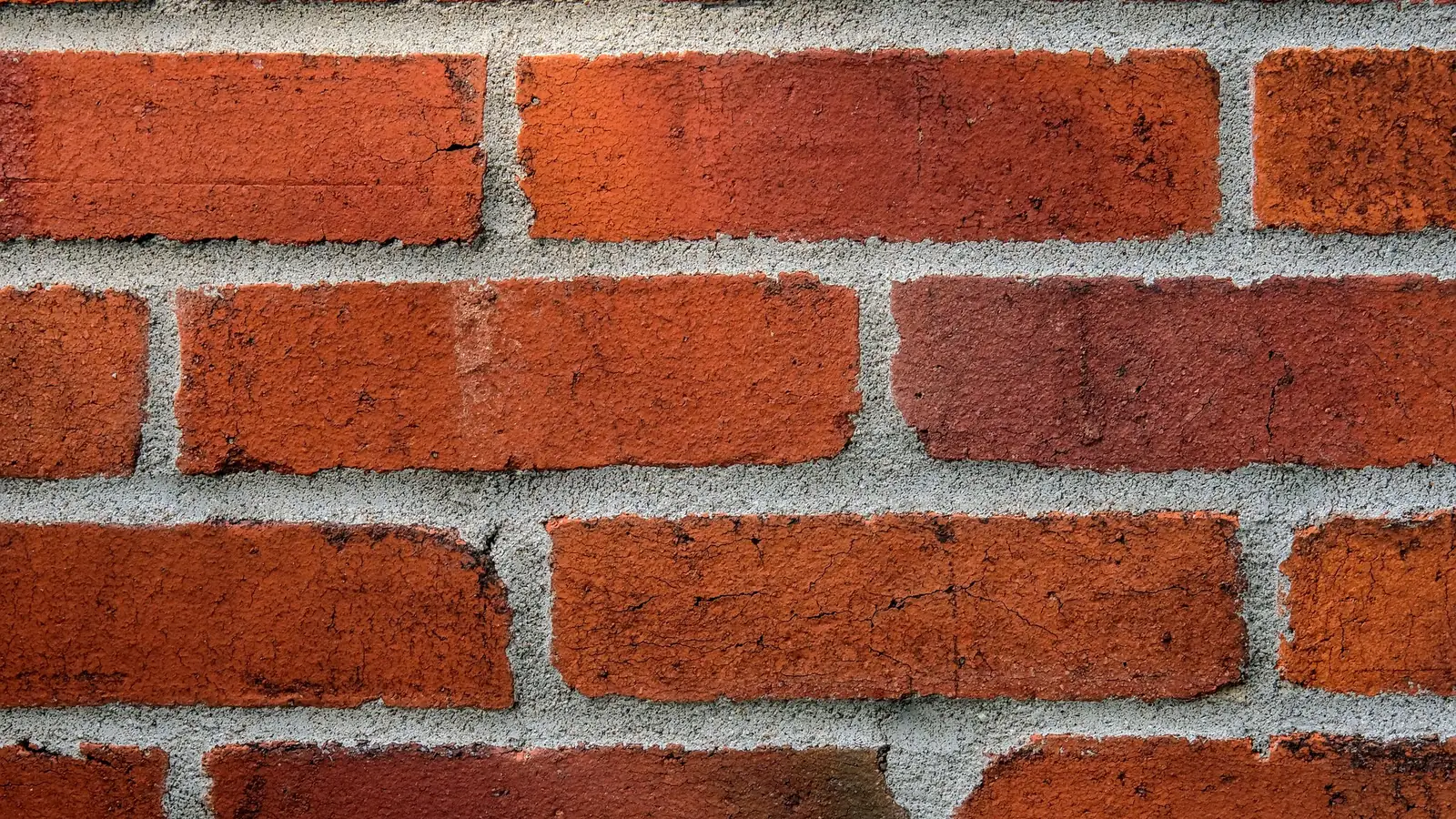
Mortar is designed to be the sacrificial part of a wall. Over time it weathers, cracks and falls out, letting water into the brickwork. Repointing replaces that worn mortar so the wall stays dry, sound and good to look at.
Signs your brickwork needs repointing
- Mortar that is recessed, crumbling or can be scraped out with a key
- Gaps or cracks in the joints, especially on exposed elevations and chimneys
- Damp patches on inside walls that line up with outside brickwork
- Earlier patch repairs in hard, grey cement that are damaging soft bricks
Lime or cement?
Most homes built before about 1920 were laid in lime mortar. Lime is softer and more breathable than the bricks around it, so moisture escapes through the joints rather than the brick face. Repointing these walls in hard cement can trap water and cause the bricks to spall.
Newer homes are usually built with cement mortar and are repointed to match. We check what your wall was built with and recommend the mix, colour and finish that suits it.
How we repoint
- Rake out the old mortar to a consistent depth, taking care not to damage the brick edges.
- Clean and dampen the joints so the new mortar bonds properly.
- Repoint with a mortar matched for strength and colour, pressed well into the joint.
- Finish the joints to suit the building, for example flush, bucket handle, weatherstruck or tuck pointed.
- Protect and cure the work from rain, sun and frost while it sets.
Finishes we offer
The joint finish has a big effect on how a wall looks. We can match an existing finish or advise on one that suits the age and style of your home, from a simple flush joint on a cottage to traditional tuck pointing on a Victorian frontage.
Repointing with other work
Repointing often goes hand in hand with brick cleaning, replacing damaged bricks or chimney repairs. Doing them together usually saves on access and scaffolding.